Crawl Space Water Damage in Mooresville, NC
Most Mooresville houses sit on a vented crawl space over red clay, so water under the floor is the most common loss in town. The extraction crew pumps it out and the drying team dries the joists and subfloor to readings.
(888) 578-4720Get the crawl space pumped out and drying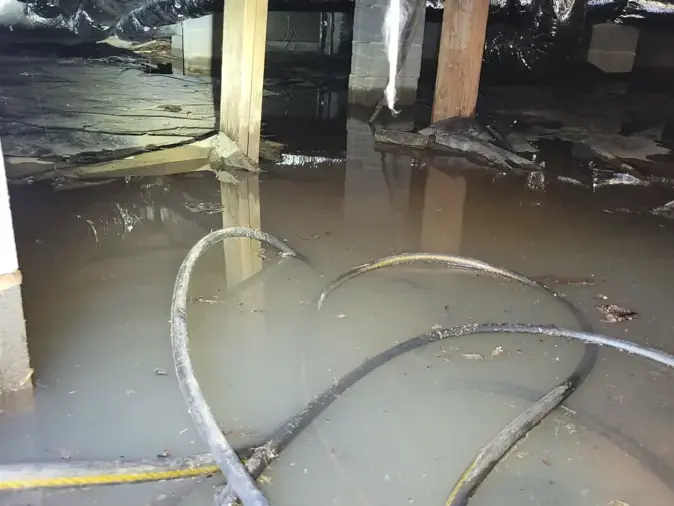
How crawl space water damage is handled in Mooresville, NC
Map the moisture
Joists, sill plates and subfloor are read from below and from the rooms above.
Extract and remove
Standing water is pumped out and wet insulation and barrier come out.
Dry the space
Air movers run along the joist bays and LGR dehumidifiers run with the vents closed.
Verify and document
Daily readings are logged until the framing reaches the drying goal.
What to do first about crawl space water damage in Mooresville
- Stay out if water is near wiring
Crawl space wiring, a pump or an air handler in standing water can be energized.
- Shut the water off
If a pipe is the source, close the main valve, often near where the line enters the house.
- Turn off the HVAC if ducts are wet
That keeps damp crawl space air from being pushed through the house.
- Photograph from the access door
Photos of the water level and any sagging insulation help the claim.
- Call for crawl space extraction
The longer water sits under the floor, the more subfloor and framing get wet.
What does crawl space water damage cost in Mooresville, NC?
In Mooresville, NC, crawl space water damage cleanup typically runs $2,500 to $9,000, depending on how much water was standing, how much insulation and vapor barrier has to come out and how long the framing takes to dry.
Small leak, caught early
- Extraction
- Partial insulation removal
- Dehumidifier drying
Flooded crawl space
- Full pump-out
- Insulation and barrier removed
- Several days of drying
Crawl space and floor above
- Subfloor and flooring affected
- Drying from above and below
- Daily readings logged
These are typical ranges, not a quote. The drivers are the water category, the square footage, the material class and how fast drying started. For a closer planning number, try the water damage cost calculator.
Crawl space water in Mooresville usually comes from one of three places: a supply or drain line leaking under the floor, storm water running off red clay and through the foundation vents, or condensation dripping off cool ductwork in a humid July. A leak under the house can run for days before anyone notices a soft floor or a musty smell upstairs.
Why crawl spaces are handled differently
A crawl space is tight, dark and full of materials that soak up water. Fiberglass batts between the joists hold water against the wood, and a plastic vapor barrier traps a pool on top of the clay. The restoration team treats the space as its own drying chamber, not as an afterthought to the rooms above.
- Standing water is pumped off the vapor barrier first
- Wet insulation comes down so the joists and subfloor can dry
- Damaged vapor barrier is removed and replaced once the space is dry
- LGR dehumidifiers run with the foundation vents closed so humid outside air stays out
- Joists, sill plates and subfloor are read with pin meters every day
How the crawl space is dried
The tech who does the walkthrough maps moisture from inside the crawl space and from the floor above, because water often wicks up into the subfloor and bottom plates. The extraction crew pumps out what is standing, then air movers push air along the joist bays while dehumidifiers pull the moisture out of the space. Drying continues until the framing reads within 2 to 4 points of dry framing elsewhere in the house.
Trade fact: in a humid Carolina summer, opening the foundation vents to dry a crawl space usually adds moisture instead of removing it. Closed vents and dehumidifiers dry it faster.
Keeping the next storm out
Downspouts that empty against the foundation, a lot that slopes toward the house and a torn vapor barrier are the usual repeat causes. NC State Extension publishes crawl space and home moisture information for North Carolina homeowners, and the EPA explains why moisture control matters inside the 24 to 48 hour window. If the water reached finished rooms, see structural drying.
Crawl Space Water Damage questions in Mooresville, NC
How do I know if my crawl space has water?
A musty smell upstairs, cupping hardwood, a soft spot in the floor or a jump in the water bill are the usual signs. A look through the access door with a flashlight after a storm or a leak confirms it.
Can a wet crawl space just dry on its own?
Rarely. Clay under the barrier and humid summer air keep the space damp, and wood that stays wet for more than a couple of days invites mold. Dehumidifiers and air movers dry it on a predictable schedule.
Does wet insulation have to come out?
Usually yes. Fiberglass batts that got soaked sag, hold water against the joists and lose their value as insulation. They are removed so the framing can dry, then replaced.
Should I open the foundation vents to dry it?
Not in warm, humid weather. Outside air in a Mooresville summer often carries more moisture than the crawl space, so the drying team keeps vents closed and runs dehumidifiers.
Is crawl space water covered by insurance?
A sudden pipe leak is often treated differently from seepage or long-term humidity. Coverage depends on your policy, so it is worth checking with your own insurer.
How long does drying a crawl space take?
A small leak caught early may dry in three to four days. A flooded crawl space with wet subfloor above often takes five to seven days, depending on the readings.
Crawl space water damage across Mooresville, NC
The Mooresville restoration crew handles crawl space water damage downtown, in the Mill Village, along Brawley School Road and The Point, Williamson Road, Langtree and Mount Mourne, ZIP codes 28115 and 28117, with Troutman, Statesville, Davidson, Cornelius, Huntersville, Denver, Sherrills Ford and Kannapolis close by.
Water damage in Mooresville right now?
The restoration team extracts standing water, dries the structure to the IICRC S500 standard and documents every step for your insurance claim.